
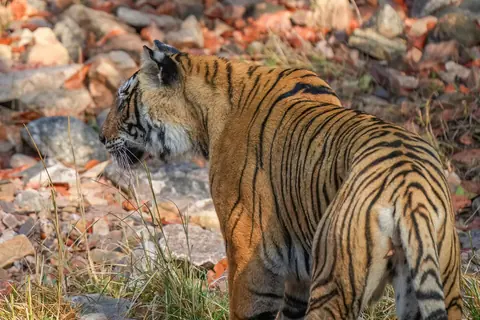
 Ranthambore Tiger Reserve
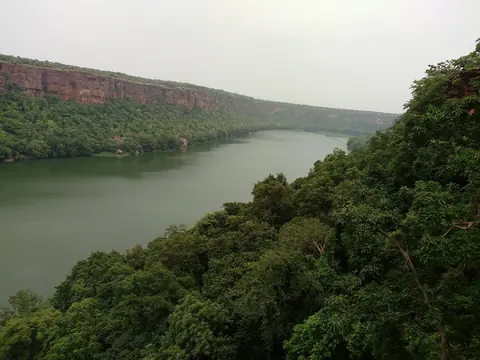 Mukundara Hills & Chambal
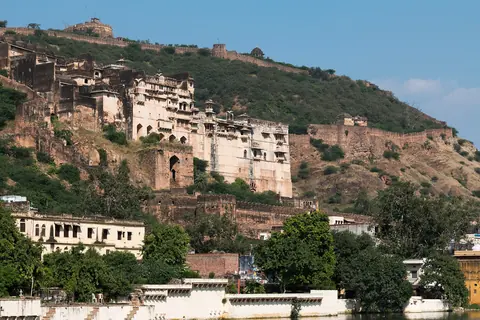 Ramgarh Vishdhari
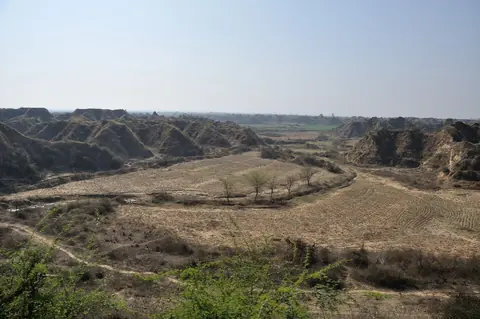 Dholpur–Karauli
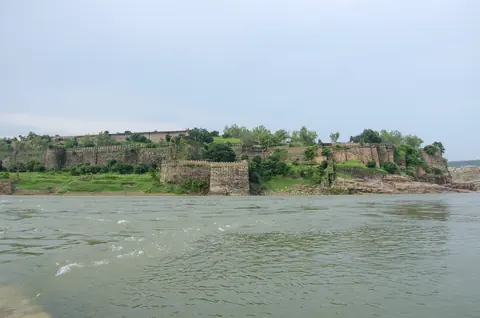 Baran–Jhalawar Heritage
May 6th. Peak summer. 10:30 in the morning. The heat in Sawai Madhopur had already crossed the point where it stops being weather and becomes a physical presence — the kind that presses against your skin and politely suggests that sane people stay indoors. We did not stay indoors. That is where the story begins.
The Imperfect Road That Gives You the Perfect Story
Three of us — Dr. Dharmendra Khandal, Praveen Singh, and I — loaded into a Maruti Suzuki Jimny and pointed the nose toward Baran. We knew our destination. We had no idea what the day would hand us.
The Delhi-Mumbai Expressway wasn't fully open on this stretch, so we took the old road through Kustala and Lakheri — one that alternated between smooth tarmac and sections so broken they rattled loose thoughts you forgot you had. I have come to believe that bad roads are good fortune for anyone who actually wants to see something. A perfect highway delivers you to a destination. A broken road delivers you to a story.
En route, we passed through Indragarh — a quiet town with a closed fort on one side and the Bijasan Mata temple on the other. Locals speak of leopards that move through the area regularly. We didn't linger. But that fort lodged itself in memory. Some places refuse to let you go easily.
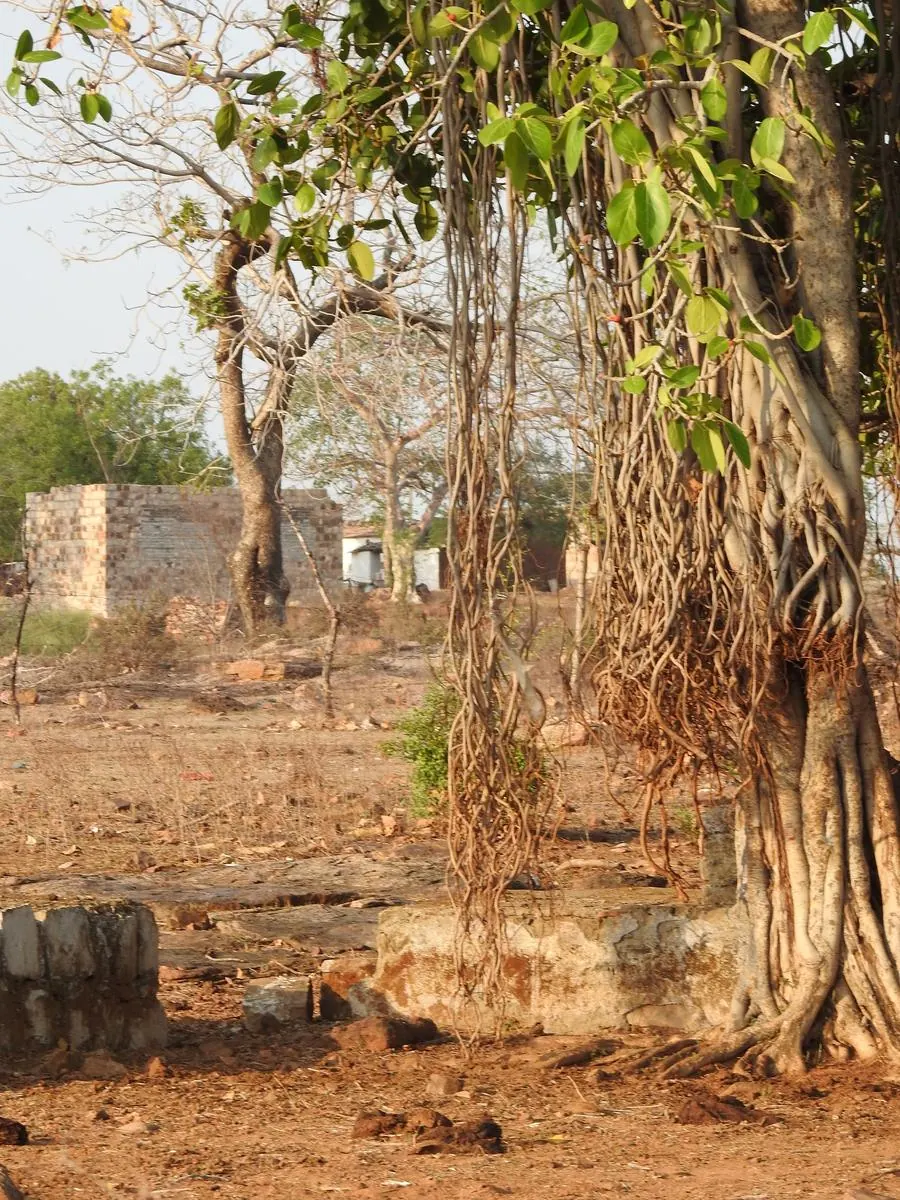
A banyan silently reclaiming old stone along the route — nature keeps its own schedule.
Sorsan: Where the Forest Teaches Its First Lesson
We arrived at the Sorsan Conservation Reserve mid-morning. Blackbuck country — those spiral-horned antelopes that photographers dream about. The plan was simple: spot a few in the open grassland.
The blackbucks didn't appear.
Instead: spotted deer threading through dry scrub, a jackal cutting unhurried across the road, and a silence so complete you could hear your own heartbeat. And in that silence, the forest delivered its first lesson of the day — you don't visit a species. You visit a place, and the place decides what it wants to reveal.
The Place I Will Not Name
From Sorsan, we turned toward a location I am deliberately not going to identify. Not because it's a secret exactly — but because some places are safer when fewer people know them. This is one of those places.
It sits tucked inside the folds of the Vindhya range. From the road, you'd drive straight past it. No signboard. No parking. No geotag. You have to know someone who knows.
As we descended into the ravine, the temperature dropped. The quality of light changed. The sound of the highway disappeared entirely. A different world opened up.
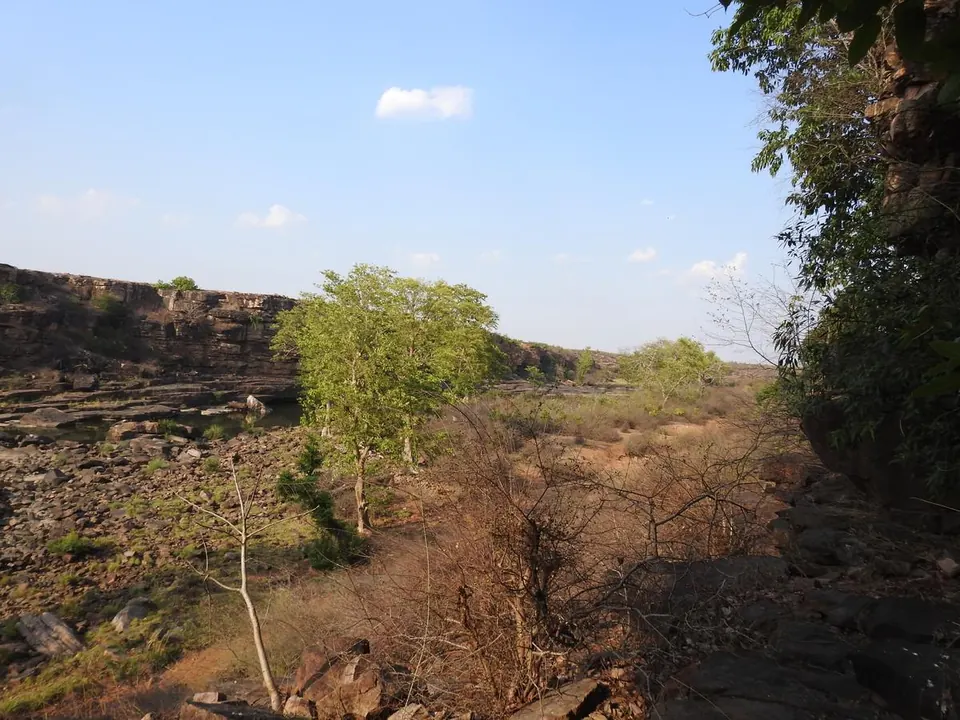
The Vindhya corridor — a landscape that looks empty until you learn how to read it.
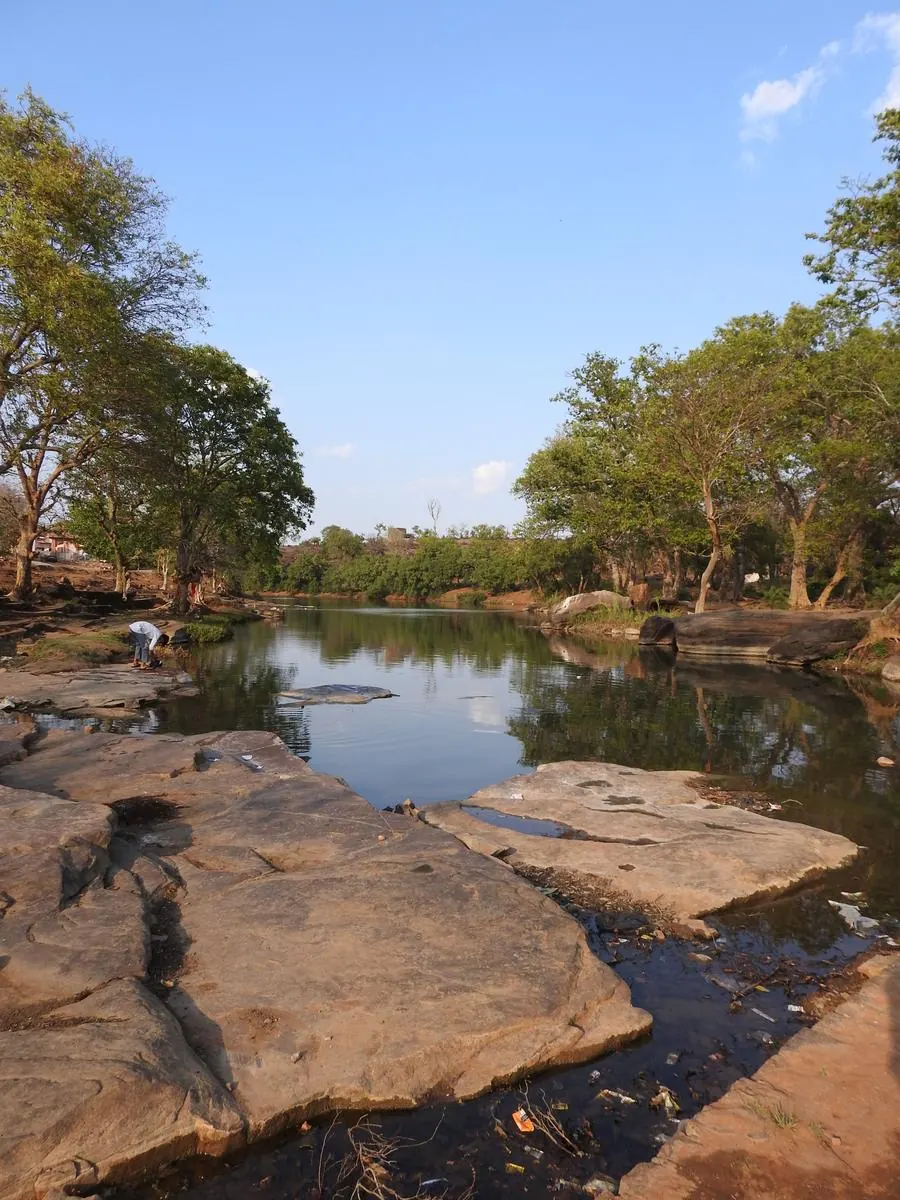
The Melon Break That Money Can't Buy
We paused by a ridge — sliced melon, hands washed in the stream, no table, no ceremony. The most honest meal I had in months. Not because of what it was, but because of where we were: suspended between one world and another, with nothing to do except be present.
The Owl That Was Already Watching Us
Mid-bite, I caught movement on a boulder thirty metres away. An Indian Eagle-Owl. Enormous. Still as stone. It regarded us with the calm of something that doesn't need to be afraid. Then, without drama, it opened its wings and was gone. It had been watching us the entire time we thought we were watching the forest.
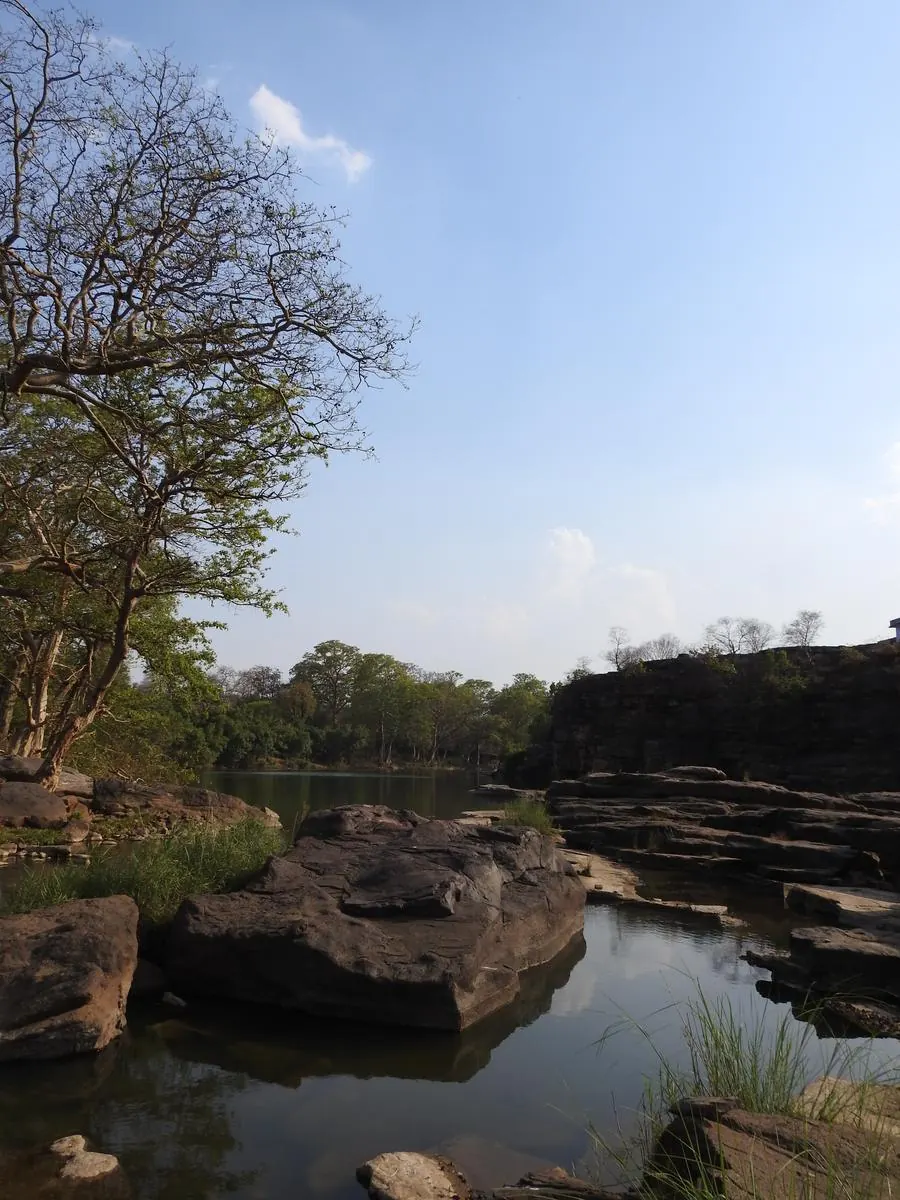
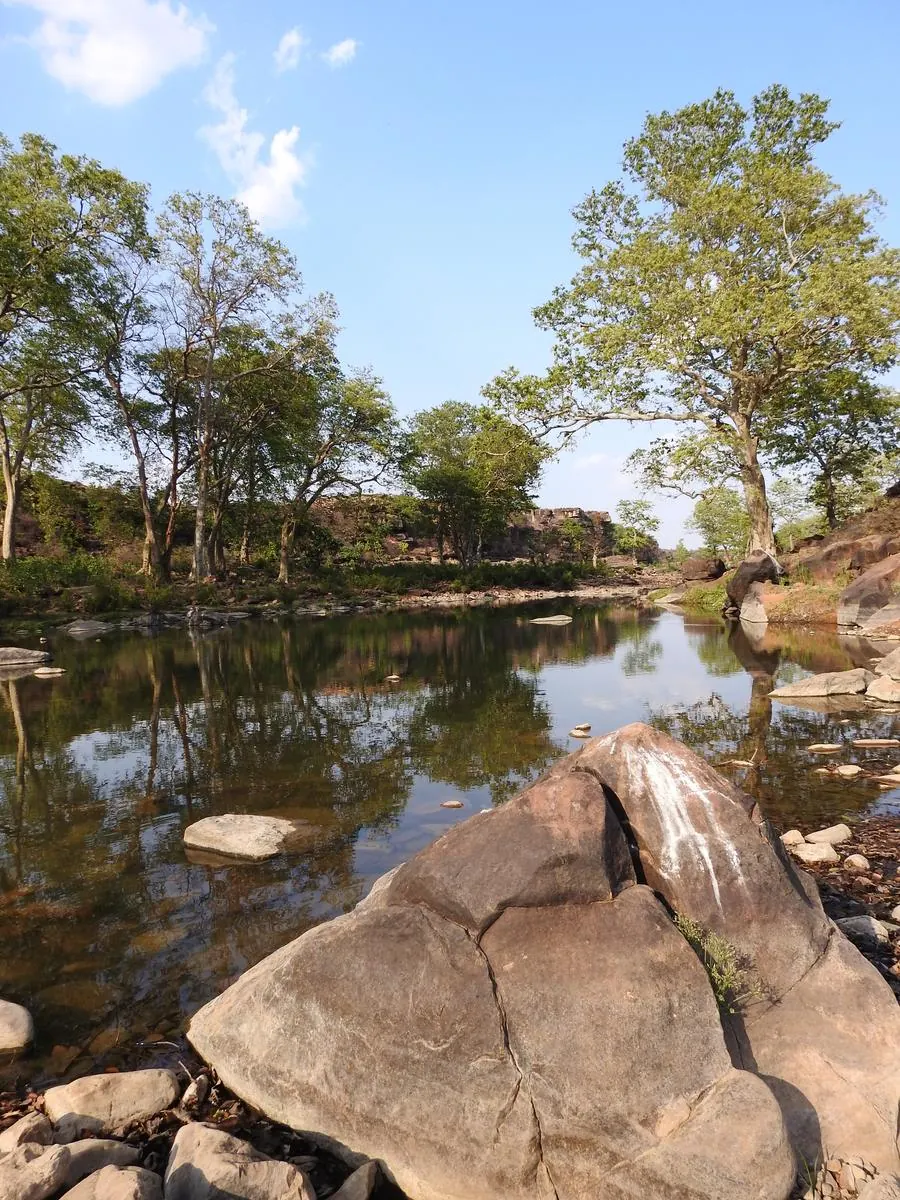
Messages From Hands Long Turned to Dust
Deeper in the ravine, we found rock paintings at two separate sites — ochre figures pressed into sandstone: animals, human shapes, patterns made permanent by people we will never know. I'm not an archaeologist. I can't date them precisely. But standing before something that old has a specific effect — it makes you feel momentarily irrelevant in the best possible way.
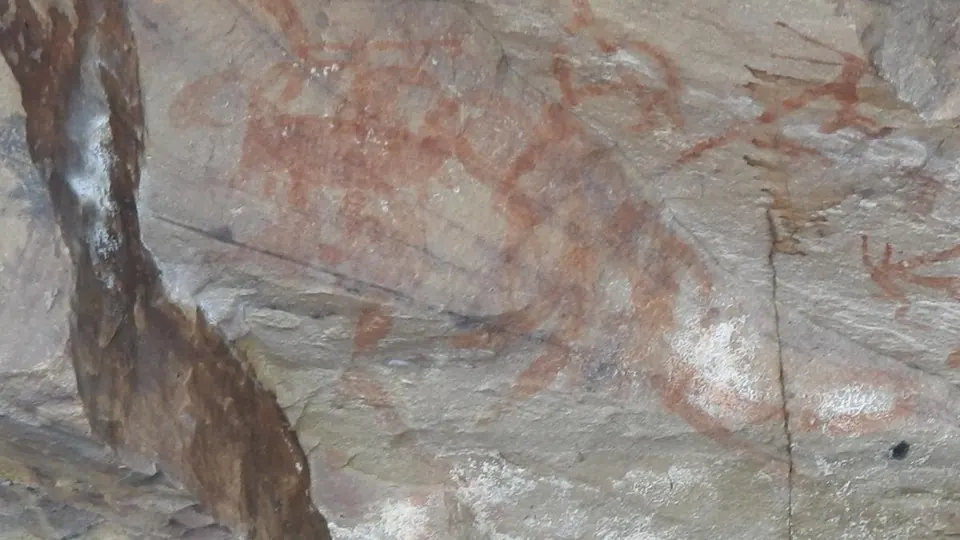
An animal rendered in red ochre — possibly a bull or bison. Thousands of years old. Still here, on this rock, in this ravine.
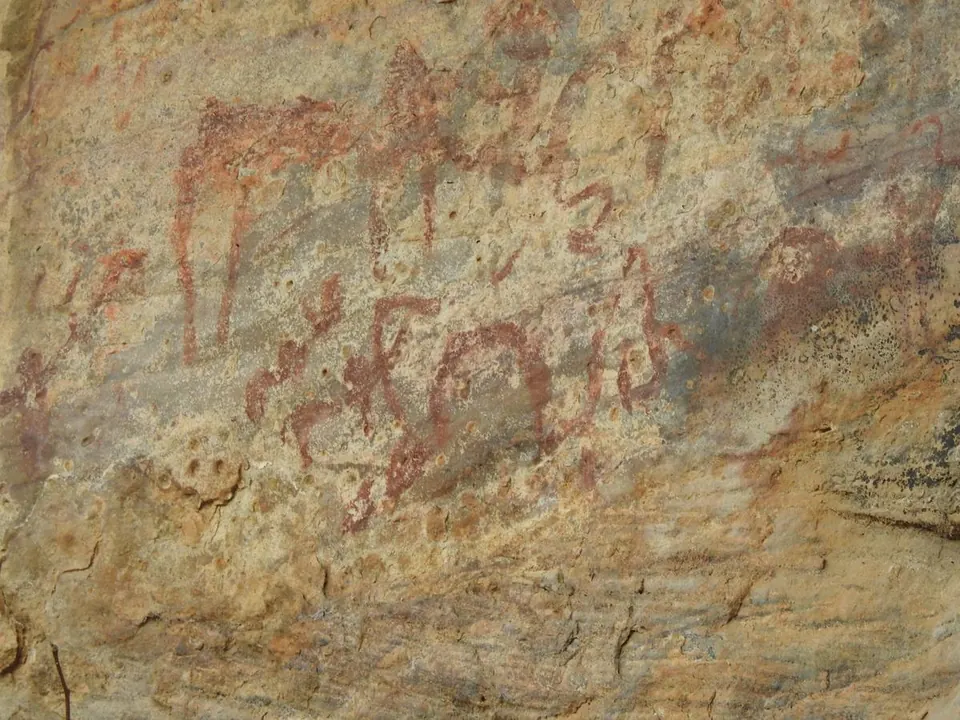
A scene of daily life — hunters, animals, the drama of a world that no longer exists. Except here.
Every Layer of This Forest Has a Story
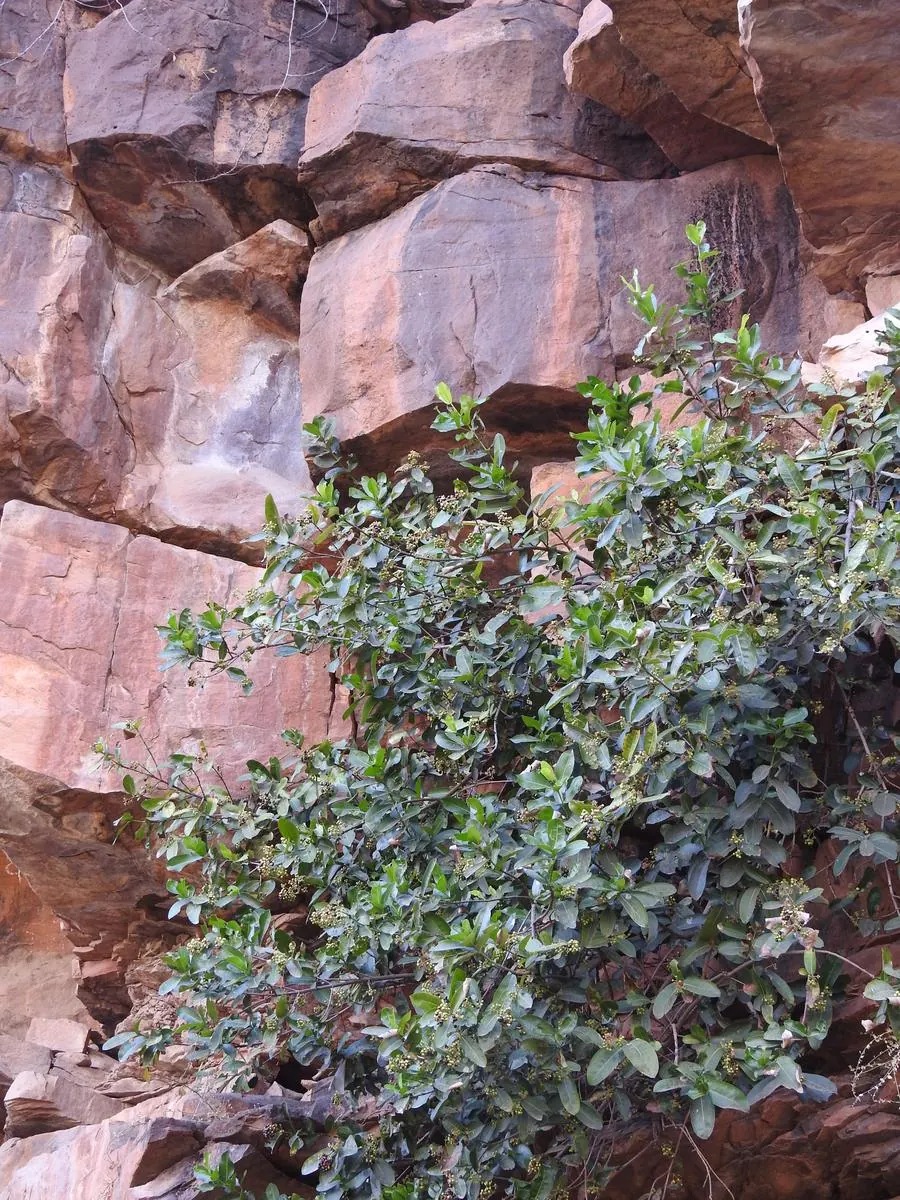
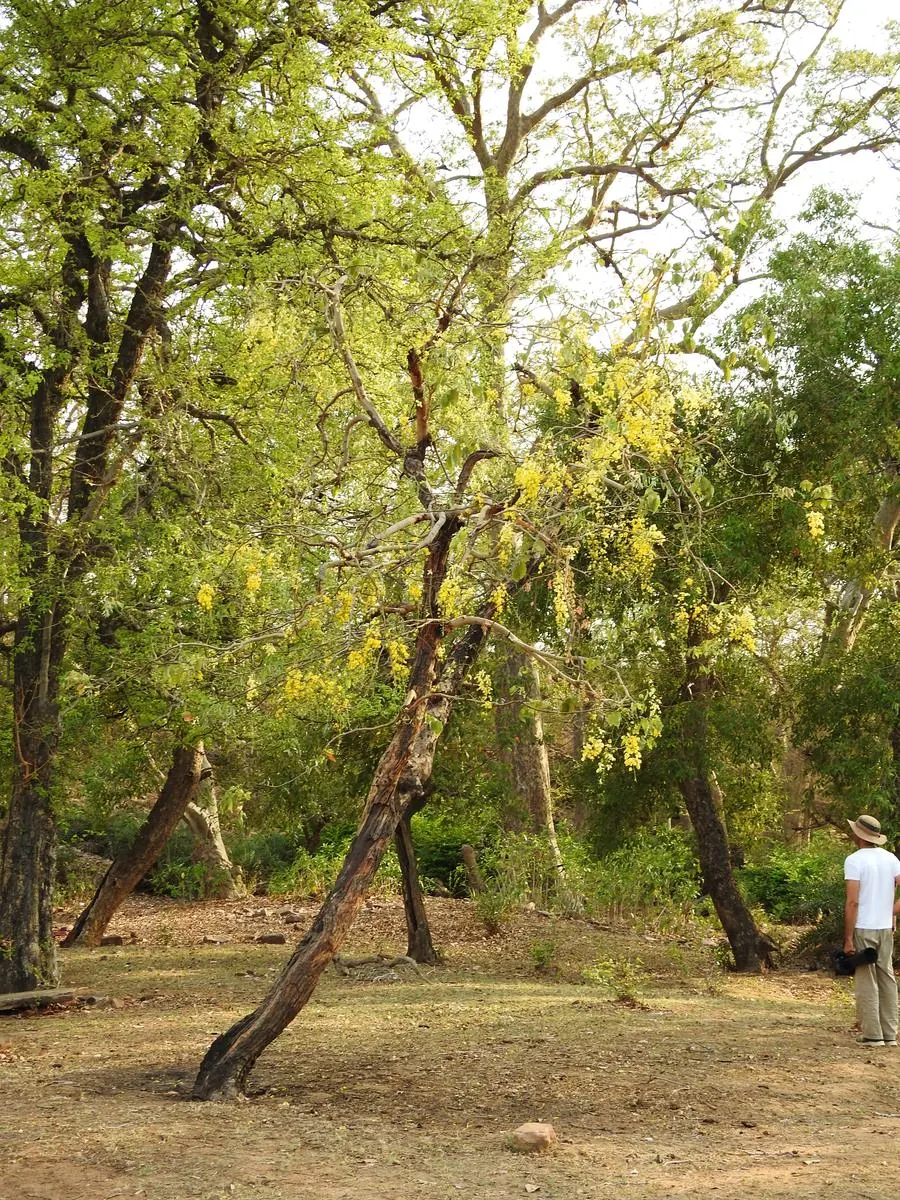
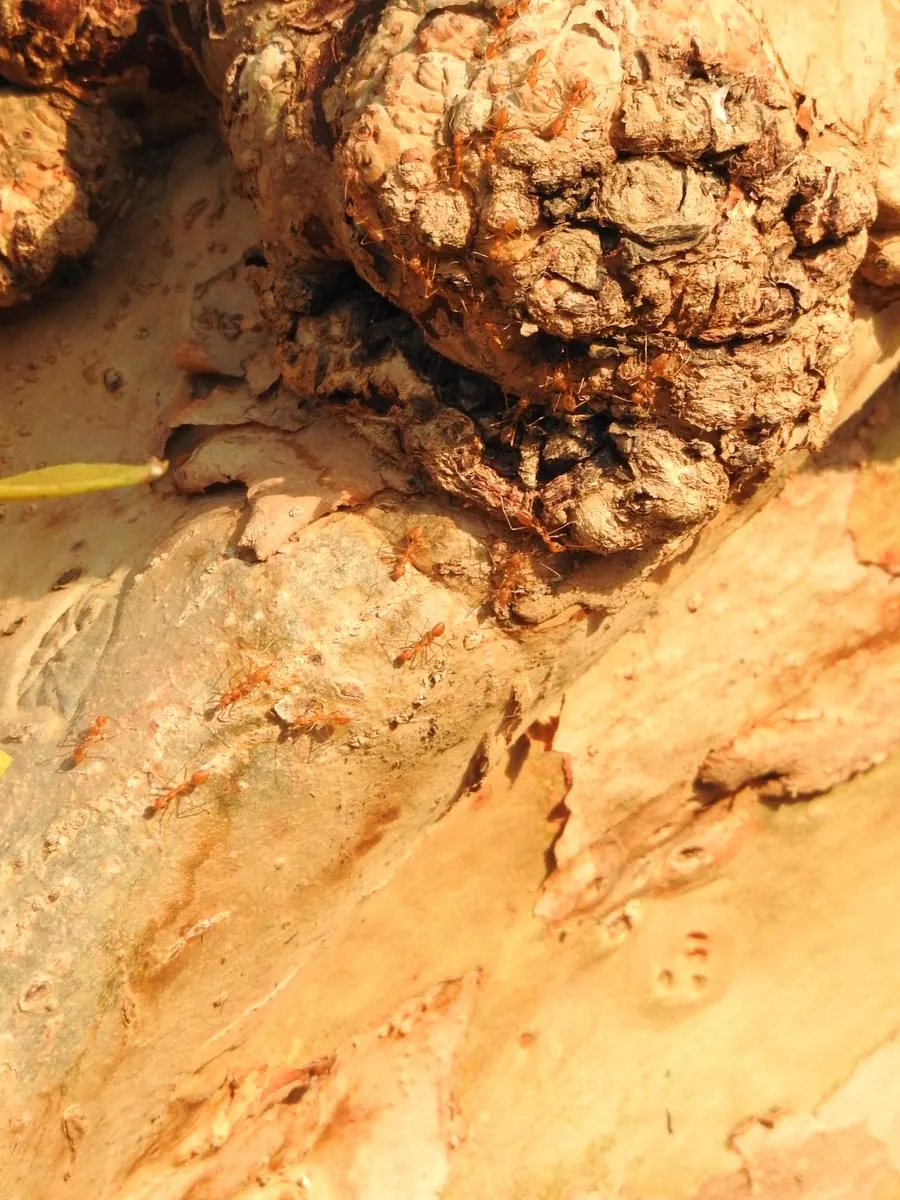
The ravine was a library. Massive Arjuna trees (Terminalia arjuna), sixty feet tall. A Golden Shower tree (Cassia fistula) in blazing full bloom. Ancient temple ruins with carvings fine enough to recall Khajuraho in miniature. A Ganesha idol — flanked by Riddhi and Siddhi — still intact, still receiving the forest's quiet devotion. And everywhere, the small dramas of life continuing at its own scale, indifferent to our presence.
A Species That Nearly Didn't Make It
We came for the White-rumped Vultures (Gyps bengalensis). Critically Endangered. Once the most abundant large raptor on the Indian subcontinent — tens of millions of birds. Then, in the 1990s, their population collapsed by over 99%. The cause: diclofenac — a cheap veterinary painkiller that is quietly lethal to vultures who feed on treated livestock carcasses.
Ninety-nine percent. The number barely registers as real until you're standing in a landscape trying to imagine it full of birds it no longer has.
But this ravine — this unnamed place — had not forgotten them. We began seeing them in ones and twos above the canopy. Then fives and tens. By the time we stopped counting: 45 to 50 birds spread across the trees, and at least 15 active nests.
A breeding colony. In 2026. Thriving.
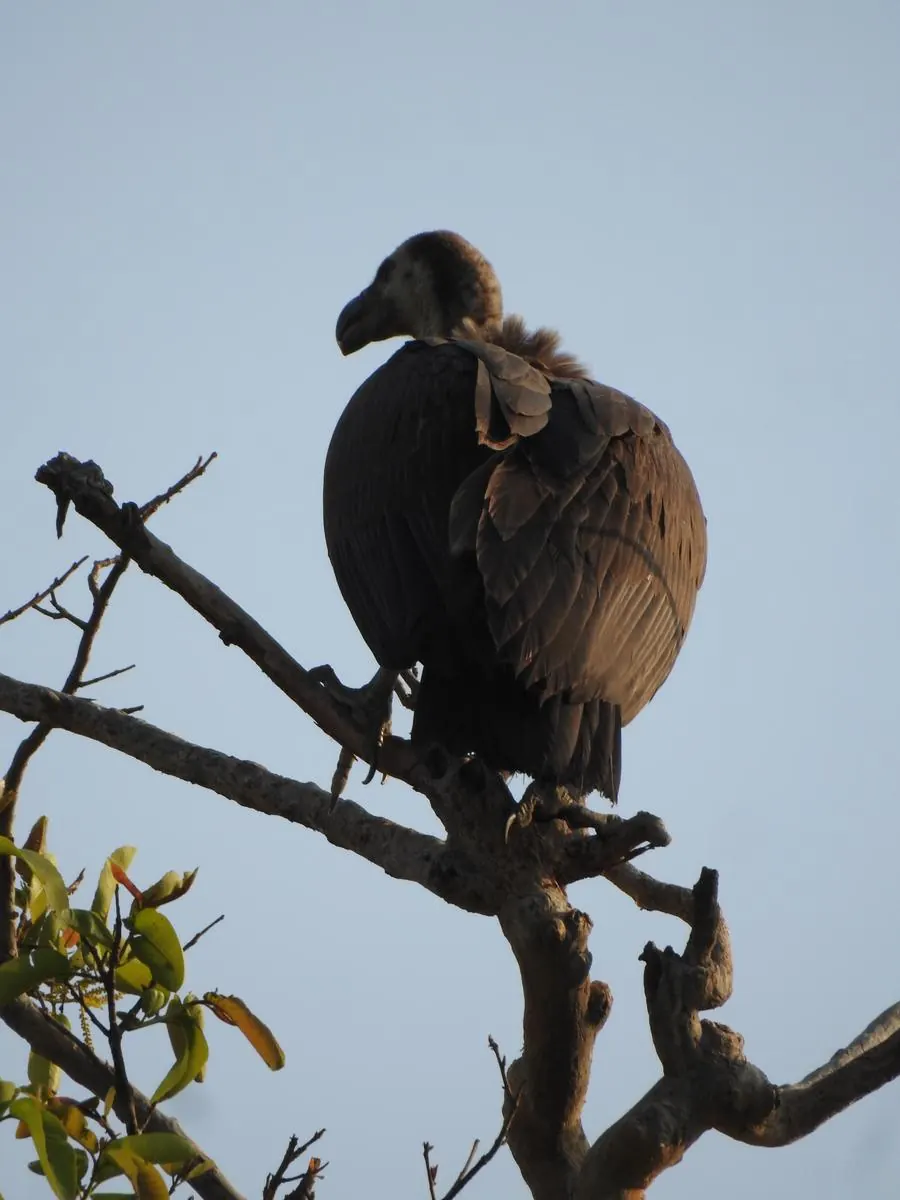
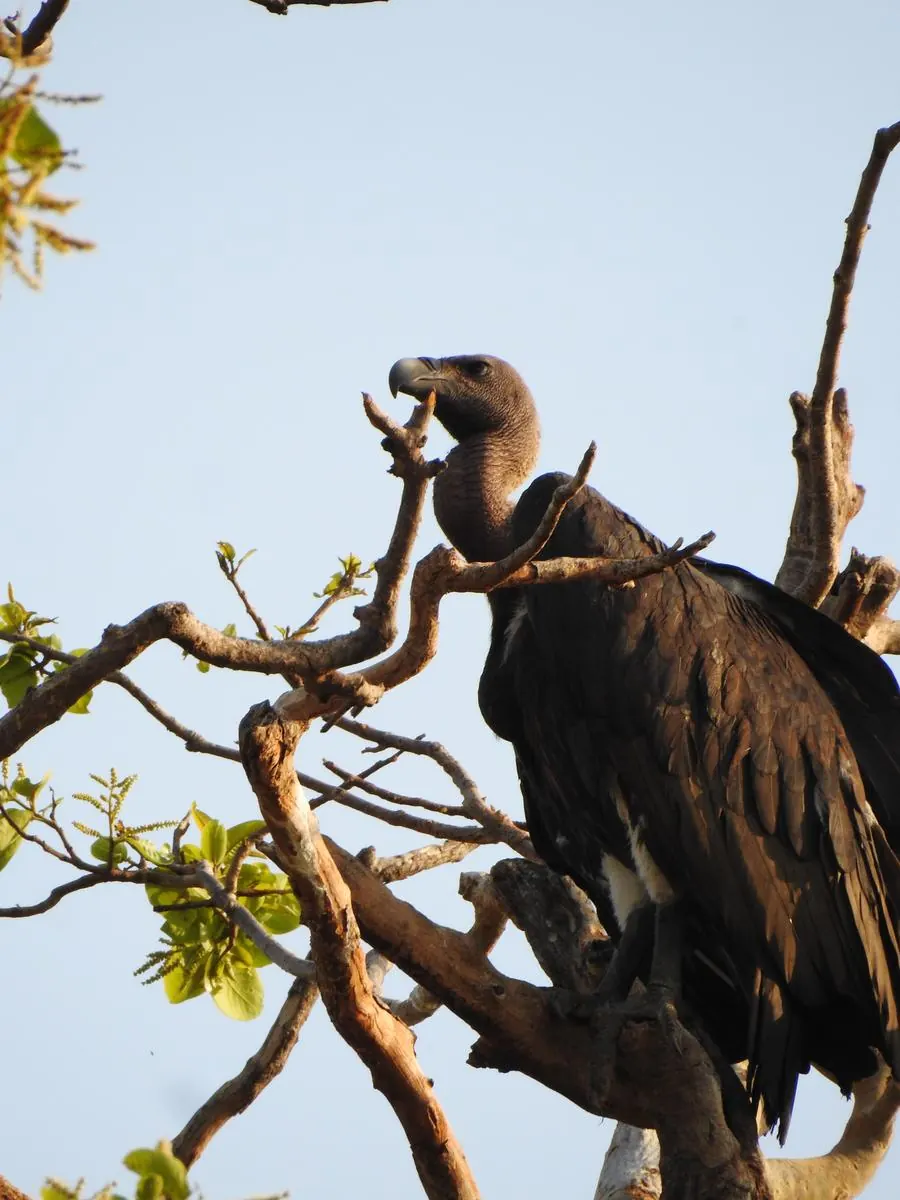
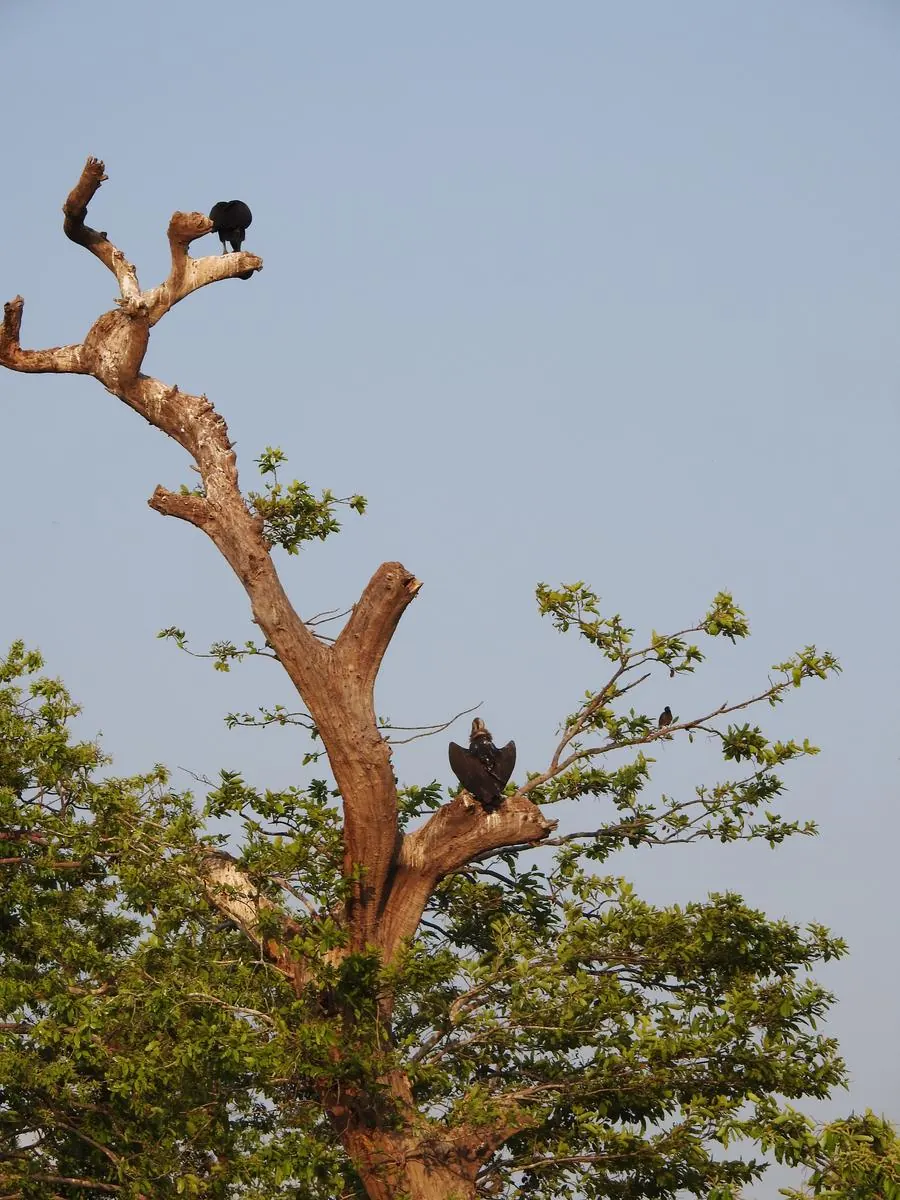
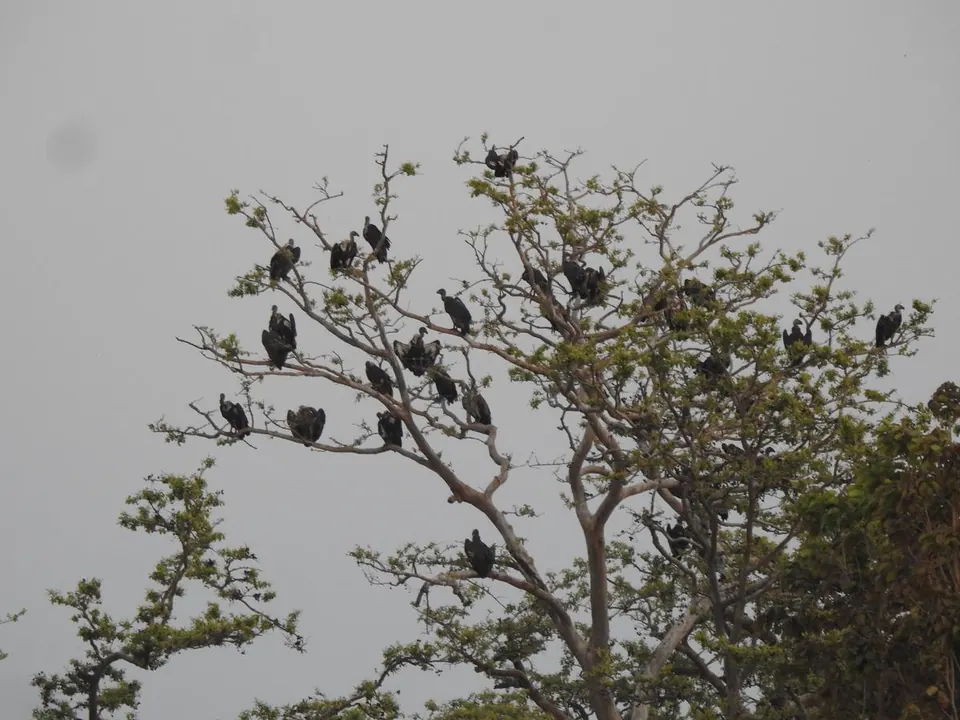
45 to 50 White-rumped Vultures in a single location — 15 active nests. A breeding colony. Against all odds. Still here.
And Then the Day Gave Us One More Gift
We were near Kelwara, crossing a small bridge in fading evening light, when something snagged at the edge of my vision. A shape in a roadside tree. Then another. Then the unmistakable silhouette of folded wings.
I said nothing for three full seconds.
"Stop the car."
We walked back through a screen of trees — and what opened up stopped all three of us completely: more than 50 vultures, clustered across just five or six trees. Denser than the first colony. Closer. Lit by the last warm gold of the evening.
Nobody spoke for a long time. The day had simply decided we needed to see it twice.
What We Carried Home
We returned via Sheopur and the Chambal bridge, headlights cutting through warm night air. We went looking for one species. The forest gave us everything else.
- An owl that had been watching us the entire time we thought we were watching the forest
- Rock paintings pressed into stone by hands ten thousand years gone
- Temples half-swallowed by the earth — and a Ganesha still standing
- A Golden Shower tree ablaze in yellow, a red ant colony in its own civilization on a single branch
- And the vultures — nesting, thriving, keeping the balance that everything else quietly depends on
The forest is still alive. That is the whole story.