
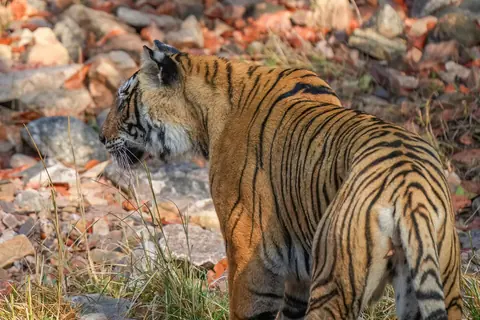
 Ranthambore Tiger Reserve
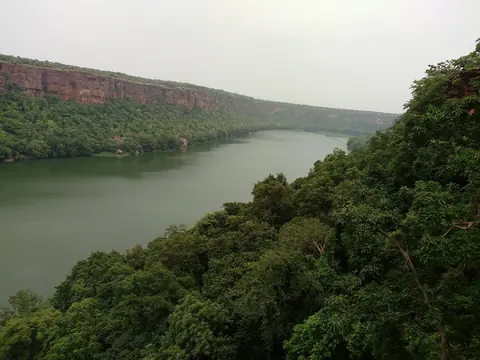 Mukundara Hills & Chambal
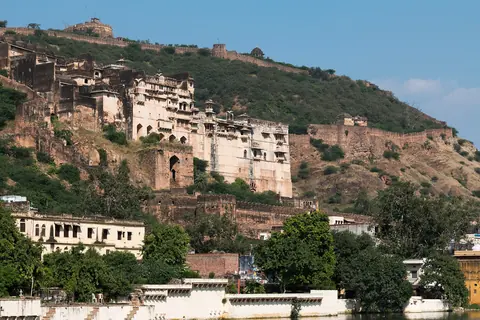 Ramgarh Vishdhari
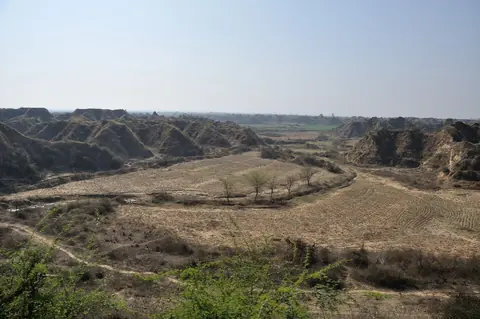 Dholpur–Karauli
 Baran–Jhalawar Heritage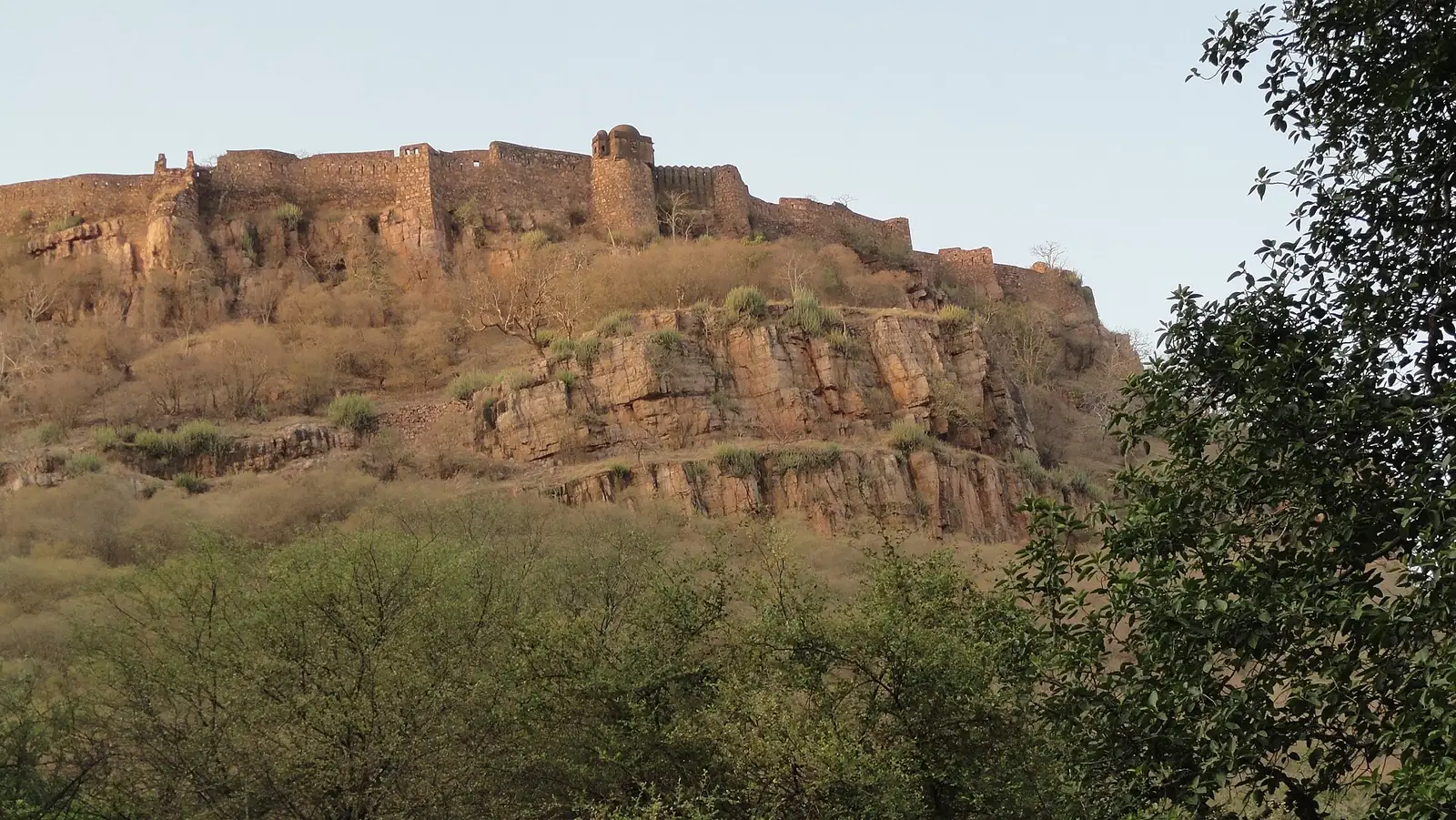
April 26th. Peak summer in Rajasthan. Two in the afternoon. While the rest of the world sat sheltered in the cool indoors, we were racing toward the jungle — dust swirling behind our gypsy, the afternoon sun unrelenting. This wasn't a safari just to find a tiger. This was a safari to understand the forest.
Gomukhi Gate: A Sign, Before We Even Entered
Outside the gate, a forest patrol vehicle stood parked. Those who know the jungle understand — this is never a coincidence. A patrol vehicle means something is close. Something large.
And there it was. A tiger — tucked inside a den. Only an ear, a sliver of face — hidden deep behind dense foliage. Not a full sighting. But enough to set hearts racing before the gate had even opened.
3:00 PM: First Gypsy In, First Step Forward
The gate swung open. We were first inside. A narrow uphill trail, rocky hills rising on both sides. I turned back — Ranthambore Fort half-swallowed by jungle, half-reaching for the sky. A view that lives in memory, not in photographs.
Zone 2 is a dry deciduous forest — perhaps Ranthambore's most underrated zone. Fewer tourists. Fewer tiger sighting records. But for those who come for nature itself — it is a goldmine.
Trees encountered along the way
The Banyan Tree Where Time Seems to Stop
One of Zone 2's hidden gems — Khemcha Kund. An ancient water body, resting under the shade of a massive Banyan tree. This place feels like the jungle's long memory — as if it has witnessed everything that has happened here, across centuries.
Langurs moved in large, unhurried groups. Peacocks walked with the casual confidence of commuters. And there was a silence here that the city never offers — the kind of silence where you begin to hear your own breathing.
Jagner: Where People Once Lived, Now Only Jungle Remains
Further ahead, we came upon the most emotionally striking part of the safari. Jagner — once a settlement. Now just broken walls, collapsed structures, and a deep, enveloping quiet.
Nature has taken back what was always hers. Roots push through crumbling walls. Vines climb what once were homes. Slowly, silently, the jungle has covered everything. This isn't a story of loss — it is a promise. That if you leave, the jungle will not forget. It will come back.
Two Birds That Made This Safari Unforgettable
No pugmarks found. No alarm calls. No predator movement. But near Khemcha Kund, a different kind of joy arrived — the kind only true wildlife lovers understand.
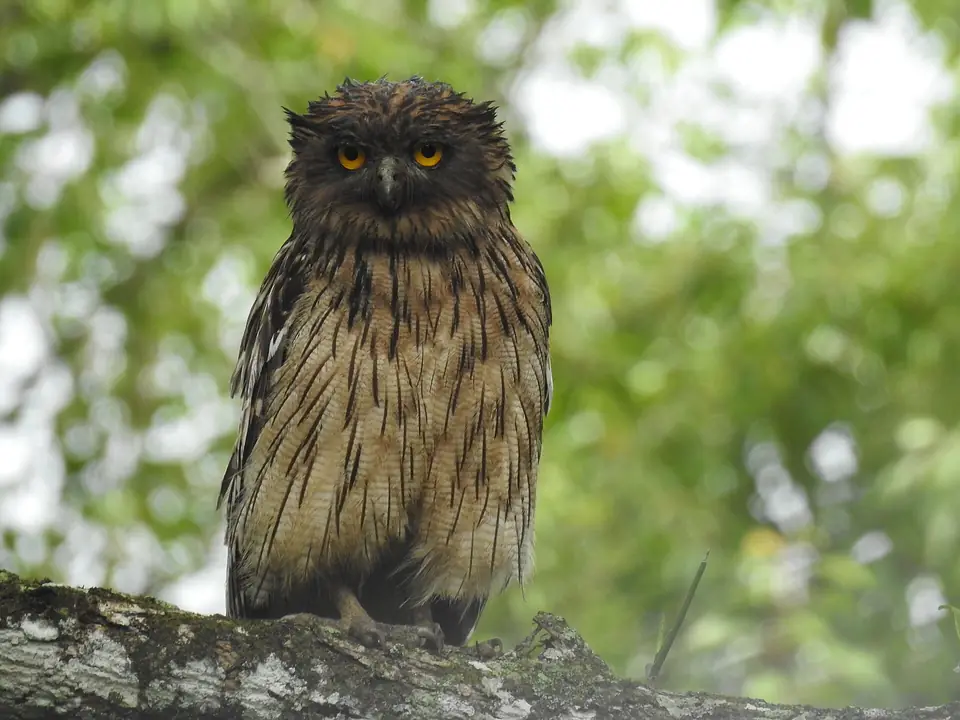
Brown Fish Owl
Ketupa zeylonensis — perched silently on a branch. So utterly still, so deeply confident — like a king holding quiet court in his own forest hall.
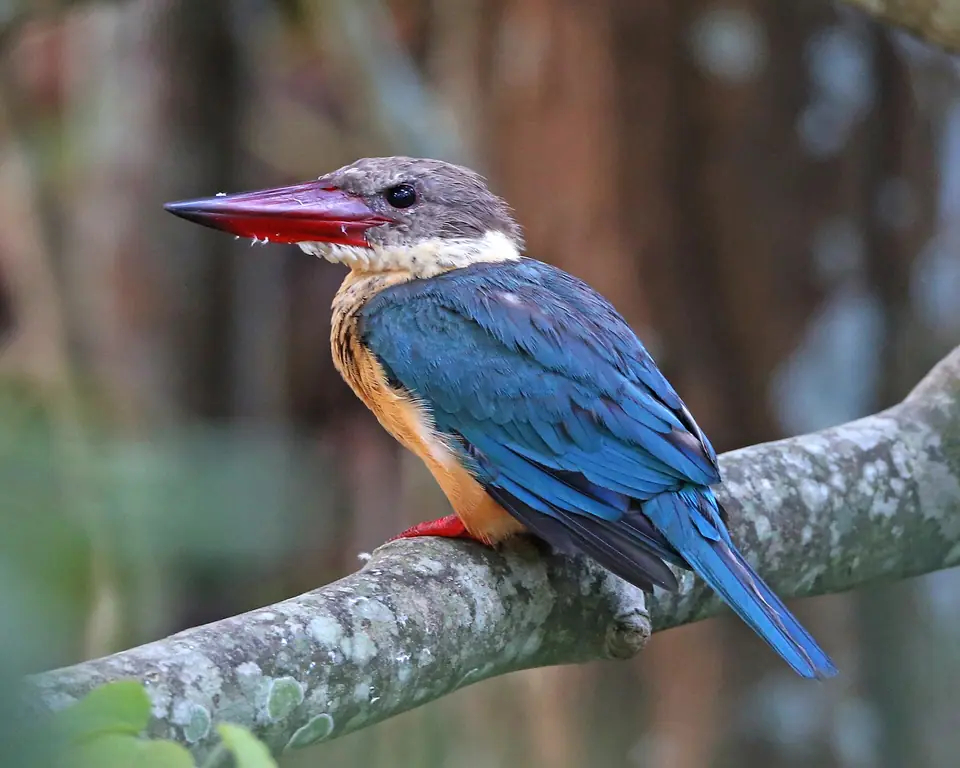
Stork-billed Kingfisher
Pelargopsis capensis — vibrant and striking. So many colours packed into one bird, it looks as if nature was experimenting with a paint palette and simply couldn't stop.
Those 2 Minutes I Will Never Forget
The safari was drawing to a close. We were heading toward the exit. And then — every vehicle stopped. A forest department vehicle signalled everyone to pull aside.
And then he appeared.
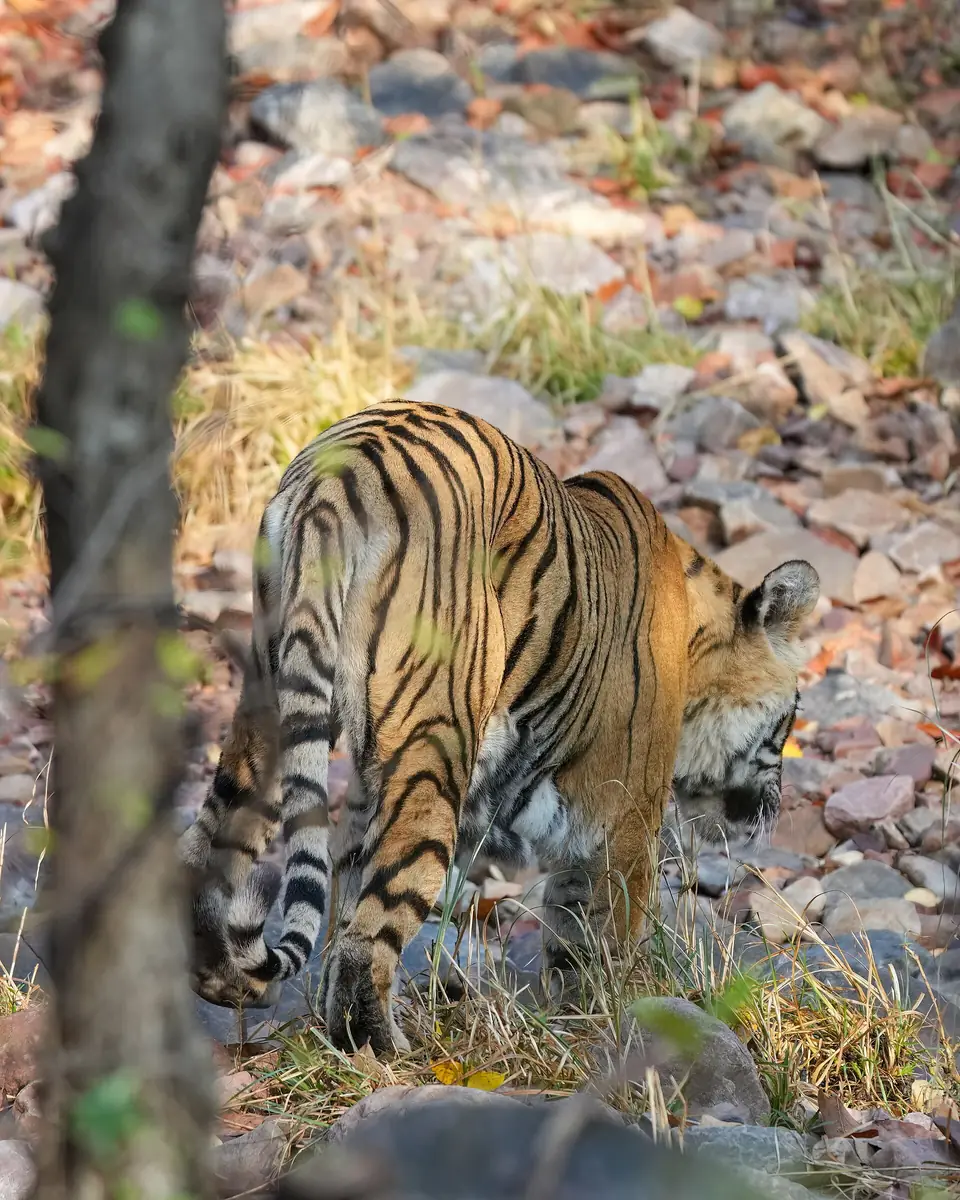
A young male tiger — around 4 years old. Walking on the main road. Just 1 metre from my gypsy. Golden body. Powerful, unhurried stride. Eyes that looked straight ahead — direct, sovereign, utterly unbothered.
I wasn't excited in that moment — I was honestly a little scared. That is the truth of it. When something that large, that real, that close is standing before you — excitement comes later. What arrives first is a raw, primal recognition: I am in his world. He is not in mine.
He paused near us. A few seconds. Then calmly walked ahead toward the anicut, and disappeared into the trees.
Those 2 minutes are etched into me completely. Every single second of them.
One Day. One Forest. Many Worlds.
Safari details received. Gypsy number, guide information. Preparations begin under the scorching Rajasthan afternoon sun.
Outside Gomukhi Gate — a tiger resting in a den. Only an ear visible. The jungle had already offered its welcome, before we even stepped inside.
Gate opens. First gypsy in. Ranthambore Fort receding behind us, rocky hills on both sides, and ahead — only jungle.
Khemcha Kund, Jagner Ruins, Crocodile Point — a zone understood not by looking, but by feeling.
Brown Fish Owl. Stork-billed Kingfisher. Two first-ever sightings — captured by camera, and kept by the heart.
Singhdwar. 1 metre. Young male tiger. 2 minutes. A memory that will last a lifetime.
What Zone 2 Truly Teaches
This zone isn't underrated because it lacks something — it's underrated because people come only looking for tigers. For those who come with patience, with curiosity, with the willingness to see the forest whole — Zone 2 is Ranthambore's most honest offering.
- A tiger sighting is never guaranteed — but the experience always is
- The jungle lives not just in great animals, but in the pale trunk of a Ghost Tree
- An abandoned settlement like Jagner is the greatest wildlife lesson of all
- Spotting a rare bird for the first time is no less thrilling than a tiger sighting
- A tiger at 1 metre does not bring excitement — it brings a primal, wordless awareness